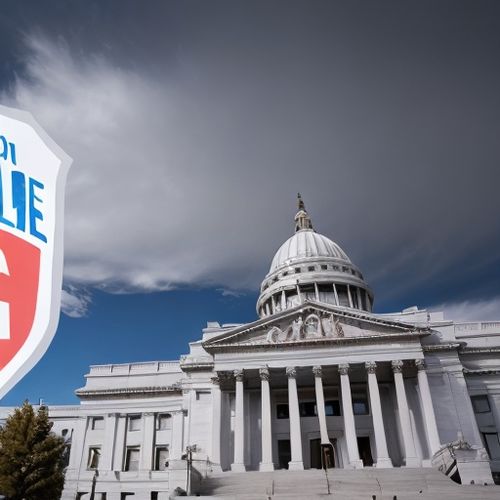
The Battle for Online Safety: Utah's Landmark Legislation and the Tech Industry's Response

Advertisement

Mar 13, 2025 By David Anderson

In the ongoing struggle to protect children's online safety, Utah has emerged as a battleground. On Wednesday, the state passed a groundbreaking bill that requires app stores to verify users' ages and obtain parental consent for minors to download apps. This legislation has sparked a fierce debate, pitting social media giants like Meta (which operates Facebook and Instagram) against app store titans Apple and Google. The bill, which now awaits the signature of Governor Spencer Cox, represents a significant step in the broader fight to safeguard children in the digital age.

Advertisement


The Legislation and Its Implications


The Utah bill, sponsored by Republican Senator Todd Weiler, mandates that app stores request age information when a user creates an account. If a minor attempts to download an app, the store must link the account to a parent's account and may require identification to confirm the parent's identity. In most cases, a credit card could serve as an age verification tool. Additionally, if a child tries to download an app that allows in-app purchases or requires agreement to terms and conditions, parental approval would be necessary.


This legislation aims to address a critical gap in online safety. Parents and advocates have long argued that social media platforms and app developers have not done enough to protect children from harmful content. Accurate age verification is seen as a crucial step in ensuring that children under 13 do not access age-restricted apps. The bill's proponents, including concerned parents like Melissa McKay, argue that inaccurate age ratings and faulty parental controls are at the root of many online harms. McKay, a Utah mother, became an advocate for such legislation after her nephew was exposed to harmful content on another student's device at school in 2017.


The Tech Industry's Divergent Responses


The Utah bill has elicited a range of responses from the tech industry. Meta, X, and Snap Inc. have expressed support for the legislation, arguing that app stores are the best place to handle age verification in a privacy-preserving manner. In a joint statement, these companies applauded Utah for "putting parents in charge" and urged Congress to follow suit. They believe that centralizing age verification in app stores provides a more efficient and secure solution compared to individual app developers handling the process.


However, Apple and Google have taken a different stance. They argue that app developers are better equipped to handle age verification and other safety measures. Apple, in particular, has voiced concerns about the potential privacy implications of requiring all users to hand over sensitive identifying information, such as driver's licenses, passports, credit cards, or Social Security numbers. The company contends that this requirement would force parents to provide even more sensitive documentation just to allow their children to access age-appropriate apps. Apple considers age a matter of privacy and allows users to decide whether to disclose it, offering parents the option to set age-appropriate parameters for app downloads. The Google Play Store operates similarly.


The Broader Context: A Nationwide Debate


Utah's legislation is not an isolated effort. Similar bills have been introduced in at least eight other states, reflecting a growing nationwide push to address children's online safety. These proposals follow legal battles over laws requiring social media platforms to verify the ages of users. The debate over who should bear the responsibility for age verification—app stores or individual app developers—has intensified as concerns about children's exposure to harmful content have mounted.


The tech industry's response to these legislative efforts has been mixed. Apple and Google, along with other tech companies, have supported the Chamber of Progress, a tech policy group that lobbied Utah lawmakers to reject the bill. Last year, Apple helped defeat a similar bill in Louisiana that would have required app stores to enforce age restrictions. Kouri Marshall, a spokesperson for the Chamber of Progress, described the Utah bill as "a tremendous encroachment of individual privacy" and argued that it places an undue burden on app stores to ensure online safety.


The Path Forward: Balancing Safety and Privacy


The Utah bill raises fundamental questions about the balance between online safety and privacy. Proponents argue that centralized age verification in app stores is essential for protecting children from harmful content. They contend that app stores, with their vast resources and reach, are better positioned to implement effective and secure verification processes. This approach, they argue, provides parents with a "one-stop shop" for managing their children's online activities.


On the other hand, opponents like Apple and Google emphasize the importance of user privacy and the potential risks associated with requiring sensitive information from all users. They argue that app developers, who have intimate knowledge of their products, are better equipped to handle age verification and other safety measures. This perspective highlights the need to protect user data and minimize the potential for misuse.


The Role of Legislation and Public Advocacy


The passage of Utah's bill underscores the critical role of legislation in shaping the digital landscape. As states across the US grapple with the challenge of protecting children online, lawmakers are increasingly turning to legislative measures to address perceived gaps in industry self-regulation. The Utah bill, if signed into law by Governor Cox, would take effect on May 7, marking a significant shift in the responsibility for age verification.


Public advocacy has also played a crucial role in driving these legislative efforts. Parents and concerned citizens, like Melissa McKay, have been instrumental in raising awareness about the risks children face online and pushing for stronger protections. Their voices have helped shape the debate and influenced lawmakers to take action. However, the success of these efforts depends on finding a balance between protecting children and preserving user privacy.


Navigating the Digital Age


The Utah bill represents a landmark effort in the fight for children's online safety. It highlights the complex interplay between legislative action, industry response, and public advocacy. As states continue to introduce similar bills, the debate over who should bear the responsibility for age verification—app stores or app developers—will only intensify.


In navigating this complex landscape, it is essential to recognize the importance of both safety and privacy. Centralized age verification in app stores offers a potential solution to the problem of children accessing harmful content. However, it must be implemented in a way that minimizes the collection of sensitive user information and protects user privacy.


Ultimately, the success of these legislative efforts will depend on the ability of lawmakers, tech companies, and concerned citizens to find common ground. As the digital age continues to evolve, the need for robust online safety measures remains paramount. The Utah bill, with its bold approach to age verification, serves as a reminder that protecting children in the digital age requires both innovation and collaboration.



Recommend Posts
Tech

Elon Musk's Starlink Secures Major Inroads in India: A Strategic Leap Forward

By Samuel Cooper/Mar 13, 2025

Elon Musk's relentless pursuit of global connectivity has taken a significant leap forward with the recent announcement of two landmark deals that will bring SpaceX's Starlink satellite internet services to India. These agreements, secured with the country's top telecom providers Reliance Jio and Bharti Airtel, mark a pivotal moment for Starlink as it seeks to expand its reach into one of the world's most populous and rapidly growing markets.
Tech

Intel's New CEO: A Ray of Hope Amidst a Turbulent Era

By Benjamin Evans/Mar 13, 2025

In the ever-evolving landscape of the semiconductor industry, Intel, once the undisputed leader, has found itself grappling with a series of setbacks that have raised concerns about its future. The company's struggles have been well-documented: a failure to capitalize on the mobile computing revolution, a missed opportunity in the burgeoning AI market, and a series of financial disappointments that have seen its stock plummet. However, amidst this turbulence, Intel has taken a decisive step by appointing Lip-Bu Tan as its new chief executive, a move that has been met with cautious optimism from investors and industry observers alike.
Tech

The FTC's Struggle Amid Resource Constraints: A Test for Consumer Protection

By Elizabeth Taylor/Mar 13, 2025

The US Federal Trade Commission (FTC) finds itself at a critical juncture, grappling with significant resource constraints that threaten its ability to effectively enforce consumer protection and antitrust laws. This challenge came into sharp focus on Wednesday, when the FTC requested a federal court in Seattle to delay a September trial in its case against Amazon, alleging that the tech giant misled consumers over its Prime subscription service. The FTC's plea for a delay underscores the broader impact of large-scale government cutbacks, driven by the Trump administration's efforts to reduce the size of the federal workforce.
Tech

The Future of Urban Transit: AI and the Quest for Efficiency

By Emma Thompson/Mar 13, 2025

In the bustling metropolis of New York City, where the Metropolitan Transportation Authority (MTA) operates one of the largest public transit systems in the world, innovation is not just a luxury but a necessity. With over 472 subway stations and 237 local bus routes, the MTA is responsible for facilitating over 1 billion trips on the subway annually. Yet, despite its vast reach, the aging transit system faces persistent challenges, including service disruptions and delays that impact millions of riders daily. In this context, the MTA's collaboration with Google Public Sector on a pilot program called TrackInspect represents a promising step toward leveraging artificial intelligence (AI) to enhance transit efficiency and reliability.
Tech

The Cyberattack on X: A Test of Resilience and a Call for Transparency

By Daniel Scott/Mar 13, 2025

In the ever-evolving landscape of social media and digital communication, the platforms we rely on for information and interaction are increasingly becoming targets for cyberattacks. On Monday, Elon Musk's X, the rebranded social media platform formerly known as Twitter, faced a significant disruption that left thousands of users unable to access the service. Musk attributed the outages to a "massive cyberattack" originating from IP addresses in Ukraine, a claim that has raised questions and concerns about the nature of the attack and its implications for digital security.
Tech

The AI Impersonation Crisis: When Technology Threatens Authenticity and Trust

By William Miller/Mar 13, 2025

In the digital age, the line between reality and imitation has become increasingly blurred, thanks to the rapid advancements in artificial intelligence (AI). While AI has brought about numerous benefits, it has also given rise to a new form of deception: AI-generated impersonations. Celebrities like Steve Harvey, Taylor Swift, and Joe Rogan have found themselves at the center of this emerging crisis, as their voices and images are manipulated to promote scams or spread misinformation. This phenomenon is not just a harmless prank; it poses a significant threat to personal brands, public trust, and even national security. As a result, figures like Harvey are now advocating for legislative action to combat this growing menace.
Tech

Alibaba's AI Ambition: A New Frontier in the Global Tech Rivalry

By George Bailey/Mar 13, 2025

In the rapidly evolving landscape of artificial intelligence, Chinese tech giant Alibaba has once again made headlines with the unveiling of its latest AI reasoning model, QwQ-32B. This announcement not only marks a significant milestone in Alibaba's AI journey but also underscores the intensifying global competition in the field of artificial intelligence. The news of Alibaba's latest achievement sent its Hong Kong-listed shares soaring 8% higher, reflecting investor confidence in the company's technological prowess and future growth potential.
Tech

The Battle for Online Safety: Utah's Landmark Legislation and the Tech Industry's Response

By David Anderson/Mar 13, 2025

In the ongoing struggle to protect children's online safety, Utah has emerged as a battleground. On Wednesday, the state passed a groundbreaking bill that requires app stores to verify users' ages and obtain parental consent for minors to download apps. This legislation has sparked a fierce debate, pitting social media giants like Meta (which operates Facebook and Instagram) against app store titans Apple and Google. The bill, which now awaits the signature of Governor Spencer Cox, represents a significant step in the broader fight to safeguard children in the digital age.
Tech

The Ebb and Flow of the Smartwatch Tide: A Tale of Market Dynamics and Shifting Fortunes

By James Moore/Mar 13, 2025

In the ever-changing landscape of consumer technology, the smartwatch has emerged as a symbol of innovation and convenience. However, recent market trends have revealed a surprising twist in the narrative. Global sales of smartwatches experienced their first decline in 2024, a development that has sent ripples through the industry. This downturn is largely attributed to the waning popularity of the market leader, Apple, whose once-unassailable dominance has been shaken by a combination of factors. As we delve into the intricacies of this market shift, we uncover a tale of innovation, competition, and the ever-evolving demands of consumers.
Tech

The Rise of Saudi Arabia in the Global Gaming Arena: A Strategic Move with Controversial Undertones

By Emily Johnson/Mar 13, 2025

In the ever-evolving landscape of the global gaming industry, where digital realms collide with real-world ambitions, a seismic shift has taken place. Saudi Arabia's Public Investment Fund (PIF) has recently announced a $3.5 billion acquisition of Niantic's gaming division, a move that sends ripples through the gaming community and beyond. This acquisition is not merely a financial transaction; it is a strategic maneuver that highlights Saudi Arabia's growing influence in the digital entertainment sector. However, it also brings to the forefront the complex interplay between economic ambition, cultural impact, and geopolitical scrutiny.
Tech

Larry Page's New Venture: Dynatomics and the Future of AI in Manufacturing

By Emma Thompson/Mar 7, 2025

In the ever-evolving landscape of technology, the application of artificial intelligence (AI) is expanding beyond traditional domains like software and services into the realm of physical product manufacturing. One of the most intriguing developments in this space comes from Google co-founder Larry Page, who is reportedly building a new company called Dynatomics. According to The Information, Dynatomics is focused on leveraging AI to revolutionize the way products are designed and manufactured. This initiative, while still in its early stages, represents a significant step forward in the integration of AI and manufacturing, promising to transform the industry in ways that could have far-reaching implications.
Tech

Alibaba's AI Breakthrough: A New Frontier in Global Tech Competition

By James Moore/Mar 7, 2025

In the rapidly evolving landscape of artificial intelligence (AI), Chinese tech giant Alibaba has once again made headlines with the unveiling of its latest reasoning model, QwQ-32B. The company claims that this model not only matches but surpasses the capabilities of rival models from industry leaders like OpenAI and the innovative startup DeepSeek. This announcement has sent ripples through the global tech community, prompting Alibaba’s Hong Kong-listed shares to close 8% higher on the day of the release and boosting the Hang Seng’s China Enterprises Index. The excitement surrounding Alibaba’s latest achievement is not just about technological prowess; it reflects a broader trend of innovation and competition in the AI sector, particularly as the US-China tech rivalry intensifies.
Tech

Utah's Landmark Legislation: A New Frontier in Children's Online Safety

By Christopher Harris/Mar 7, 2025

In a groundbreaking move, Utah became the first state to pass legislation requiring app stores to verify users' ages and obtain parental consent for minors to download apps. This bill, which now awaits the signature of Governor Spencer Cox, has sparked a heated debate between tech giants like Meta (which operates Facebook and Instagram) and app store behemoths Apple and Google. The legislation raises critical questions about who should bear the responsibility for verifying ages and ensuring online safety for children.
Tech

YouTube's Crackdown on Gambling Content: A Step Towards Responsible Digital Citizenship

By Rebecca Stewart/Mar 7, 2025

In an era where online gambling and sports betting have surged in popularity, YouTube is taking significant steps to regulate content related to these activities. The platform announced on Tuesday that it will no longer allow content directing users to "unapproved" gambling websites through links, images, text, logos, or verbal references. This move is part of YouTube's broader efforts to ensure that its content adheres to legal standards and promotes responsible digital behavior.
Tech

The Risks of AI in Government Cost-Cutting: A Cautionary Tale

By George Bailey/Mar 7, 2025

Elon Musk's Department of Government Efficiency (DOGE) has reportedly turned to artificial intelligence (AI) to guide its cost-cutting decisions, aiming to rapidly reduce the federal budget deficit by at least $1 trillion. While AI offers the promise of efficiency and data-driven insights, experts warn that this approach could lead to significant risks, including security breaches, biased firing choices, and the elimination of highly qualified government staff. As the government navigates this uncharted territory, the stakes are higher than ever, and the potential consequences could be far-reaching.
Tech

The End of an Era: Microsoft Shuts Down Skype, Paving the Way for Microsoft Teams

By David Anderson/Mar 7, 2025

In the ever-evolving landscape of technology, change is the only constant. This sentiment rings particularly true for Skype, the once-dominant internet-based phone and video service that revolutionized global communication in the mid-2000s. After more than a decade of shaping modern communications, Skype is set to shut down, with Microsoft confirming that the service will "no longer be available" starting in May. Users are being redirected to Microsoft Teams, which offers a free tier and aims to carry the torch of seamless connectivity into the future.