The Economic Crossroads: Uncertainty, Opportunity, and the Path Ahead

Advertisement

Mar 13, 2025 By Daniel Scott

In the intricate tapestry of the global economy, few voices carry as much weight as that of Larry Fink, the chief executive of BlackRock, the world's largest asset manager. Fink's recent remarks, delivered in an exclusive interview, offer a nuanced and candid assessment of the current economic landscape, one shaped by the Trump administration's aggressive policy changes and the uncertainty they have sown. As the world grapples with the fallout of tariffs, trade wars, and shifting geopolitical dynamics, Fink's insights provide a window into the challenges and opportunities that lie ahead.

Advertisement


The Paralysis of Uncertainty


Fink's assertion that the Trump administration's policy changes are paralyzing American consumers and businesses is a stark reminder of the power of uncertainty. "The collective impact in the short run is that people are pausing, they’re pulling back," he noted. This sentiment is echoed by CEOs across the economy, who report a weakening economic outlook. The imposition of a 25% tariff on steel and aluminum imports, coupled with retaliatory measures from the European Union and Canada, has created a climate of unpredictability that has businesses and consumers alike retrenching.


The ramifications of this uncertainty extend beyond the immediate economic indicators. Companies are delaying investments, hiring freezes are becoming more common, and consumers are tightening their belts. This ripple effect, as Fink describes it, has the potential to deepen and widen, creating a more pronounced slowdown. The question that looms large is whether this period of stagnation will be fleeting or if it marks the beginning of a more prolonged economic malaise.


The Tariff Tango: A Dance with Consequences


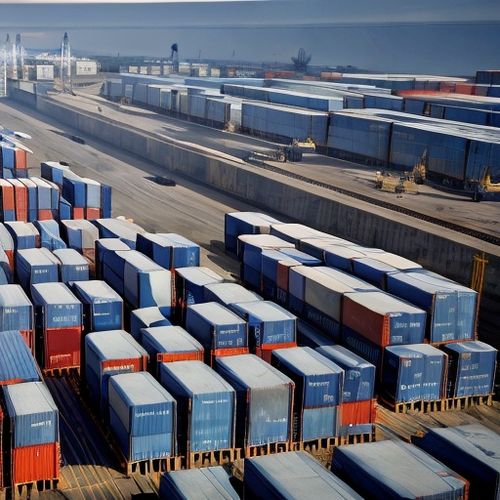
At the heart of the current economic turmoil is the Trump administration's aggressive tariff agenda. The decision to impose duties on steel and aluminum imports was met with swift retaliation, setting off a tit-for-tat trade war that has roiled global markets. This is not the first salvo in the administration's trade offensive; last month, Trump directed an investigation into foreign tariffs on US goods, promising to match them dollar for dollar. The list of targeted countries includes China, where tariffs have already been doubled to 20% on top of existing duties.


Fink acknowledges the potential long-term benefits of these tariffs, suggesting that reciprocal measures could ultimately lead to a reduction in global trade barriers. However, the immediate impact has been one of disruption and uncertainty. Wall Street has been rattled by signs of a sputtering economy, with investors seeking refuge in safer assets. The stock market's recent volatility reflects the broader anxiety, with many questioning whether the US economy is on the brink of a more pronounced slowdown.


The Role of Private Capital: Unlocking Growth


Despite the current challenges, Fink remains optimistic about the potential for private capital to unlock a new wave of economic growth. He suggests that a temporary flattening of the economy is not only possible but perhaps necessary as the market resets. "Could we have one quarter or two quarters of a flattening of our economy as we try to reset the economy? Absolutely," he said. "But I’m looking beyond that. If we are able to unlock private capital... that will restart and rekindle the next wave of a bull market."


Fink's confidence in the long-term prospects of the US economy is rooted in his belief that private capital, unleashed by favorable policies and market conditions, can drive innovation and growth. He sees the current market pullback as a buying opportunity, a chance to invest in assets that will appreciate as the economy recovers. This perspective underscores a broader theme in Fink's worldview: the importance of long-term thinking in an era of short-term volatility.


The Panama Canal: A Strategic Investment


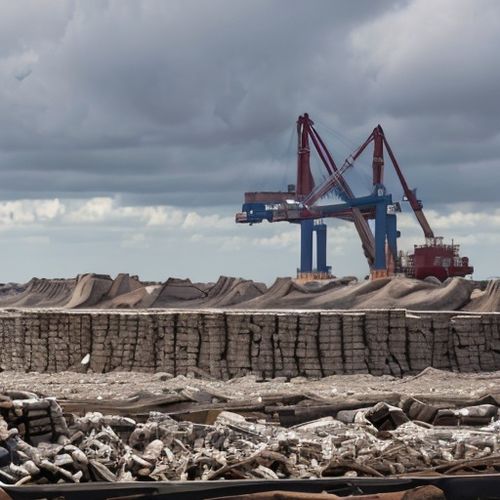
Fink's comments also touched on BlackRock's landmark purchase of two ports at either end of the Panama Canal, a move that has drawn attention for its geopolitical implications. Fink emphasized that the decision was purely economic, driven by the potential for long-term returns. The Panama Canal, a vital waterway facilitating hundreds of billions of dollars in trade annually, represents a strategic asset with significant growth potential.


The deal, part of a larger consortium's plan to invest $22.8 billion in 43 ports worldwide, is seen by Fink as a positive step toward diversifying BlackRock's portfolio and securing a foothold in a critical global trade route. While the timing of the deal may have aligned with the Trump administration's focus on reclaiming strategic assets, Fink stressed that the decision was based on economic fundamentals rather than political considerations.


The Retirement Crisis: A Hidden Threat


Beyond the immediate concerns of tariffs and trade wars, Fink highlighted another looming challenge facing the US economy: the retirement crisis. In a recent letter to investors, he described the inadequate savings of Americans as a "crisis," one that is contributing to broader economic anxiety. "I think so much of this anxiety that we have in this country is all about the fear of retirement," he said.


The implications of this crisis are far-reaching. Fink noted that the lack of adequate savings is limiting mobility, with many Americans choosing to stay closer to their families for financial support. This trend not only affects individual households but also has broader economic consequences, as it limits the labor market's flexibility and contributes to a sense of economic insecurity.


The Path Ahead: Navigating Uncertainty with Vision


As the world navigates the complex and often unpredictable landscape of the global economy, Fink's insights offer a roadmap for understanding the challenges and opportunities ahead. The current period of uncertainty, driven by tariffs and trade wars, is undeniably challenging. However, Fink's optimism about the potential for private capital to drive growth and his emphasis on long-term thinking provide a counterbalance to the short-term volatility.


The path ahead will require a delicate balance of navigating uncertainty while seizing opportunities for growth. For investors, Fink's advice to view market pullbacks as buying opportunities underscores the importance of maintaining a long-term perspective. For policymakers, the challenge lies in creating an environment that fosters innovation and investment while addressing the underlying issues that contribute to economic anxiety.


The current economic landscape is one of uncertainty and opportunity. The Trump administration's aggressive policy changes have created a climate of unpredictability, with businesses and consumers retrenching in response. However, the potential for private capital to drive growth and the importance of addressing the retirement crisis offer a glimpse of a more optimistic future. As we navigate this complex terrain, the insights of leaders like Larry Fink remind us that long-term thinking and strategic investment are key to unlocking the next wave of economic prosperity.


Recommend Posts
Business

The IRS in the Eye of the Storm: Turmoil, Turnover, and the Taxpayer Experience

By Emma Thompson/Mar 18, 2025

The Internal Revenue Service (IRS), the backbone of the US tax system, has long been a formidable institution, handling the financial intricacies of millions of taxpayers. However, in recent months, it has found itself in the eye of a storm, buffeted by unprecedented challenges that threaten to disrupt its operations and, by extension, the financial stability of the nation. The upheaval began with the embedding of members from the Department of Government Efficiency (DOGE) during tax filing season, the busiest time of the year for the IRS. Despite these disruptions, tax professionals report that the core functions of tax filing and refund issuance have remained relatively stable. However, the collateral damage is becoming increasingly apparent, with delays in critical taxpayer services and potential long-term impacts on US revenue collection.
Business

The Eroding Foundations: How Tariffs and Uncertainty Are Unraveling America's Economic Confidence

By Elizabeth Taylor/Mar 18, 2025

A year ago, America found itself in a peculiar predicament—a "vibecession," where the economy was performing well, but the national mood was overwhelmingly pessimistic. Today, the situation has evolved. The vibes and the economic data are aligning, but not in a positive direction. Instead, a confluence of factors is painting a bleak picture for the US economy, one that threatens to erode the very foundations of consumer confidence and economic stability.
Business

The Tariff Tangle: How a 200% Levy on European Wines Could Reshape America's Palate

By Grace Cox/Mar 18, 2025

In the intricate world of wine, where terroir and tradition intertwine, the threat of a 200% tariff on European-made products looms like a dark cloud over both Old World vineyards and New World wine enthusiasts. This potential tariff, proposed by President Donald Trump and set to take effect in April, promises to upend not only the economics of the wine industry but also the palates of American consumers who have long savored the rich flavors of Bordeaux, Chianti, and other European classics.
Business

The Ebbing Tide of Consumer Confidence: Retail Sales, Tariffs, and the Looming Economic Uncertainty

By Noah Bell/Mar 18, 2025

The pulse of the American economy is often felt through the wallets of its consumers. In recent times, however, the heartbeat of consumer spending appears to be weakening, sending ripples of concern through the corridors of economic analysts and policymakers alike. The latest retail sales figures, released by the Commerce Department, reveal a troubling trend: US consumers, traditionally the bedrock of economic vitality, are starting to pull back on their spending. This shift is not just a blip on the radar; it is a harbinger of broader economic challenges that could reshape the trajectory of the US economy.
Business

The Tariff Tempest: Navigating the Economic Crosswinds of Protectionism

By Victoria Gonzalez/Mar 18, 2025

In the intricate tapestry of the global economy, the threads of trade have long been woven tightly, binding nations together in a delicate balance of cooperation and competition. However, the recent tariff policies enacted by President Donald Trump have introduced a series of disruptive forces, threatening to unravel this intricate web. The Organisation for Economic Co-operation and Development (OECD) has sounded the alarm, warning that these tariffs are not only slowing economic growth in the United States but also casting a shadow over the global economic landscape. As tensions escalate and retaliatory measures mount, the potential for a more severe downturn looms large, creating a toxic stew that could have far-reaching consequences.
Business

The Tariff Tumult: A High-Stakes Gamble with Global Implications

By Ryan Martin/Mar 18, 2025

In the ever-evolving landscape of international trade, President Donald Trump has emerged as a formidable architect of a new economic order—one defined by the imposition of tariffs and the pursuit of what he deems "reciprocal" trade policies. On Sunday, aboard Air Force One, Trump declared April 2 a "liberating day" for the United States, signaling his intent to impose additional sectoral tariffs on imports, including steel and aluminum. His vision is one of economic sovereignty and industrial rejuvenation, but the path he has chosen is fraught with potential pitfalls that could reverberate through the global economy.
Business

The Consumer Financial Protection Bureau: A Safety Net Under Siege

By Sarah Davis/Mar 18, 2025

The Consumer Financial Protection Bureau (CFPB), once hailed as a crucial safeguard against predatory financial practices, now finds itself at the center of a storm orchestrated by the Trump administration. Established in the wake of the subprime mortgage meltdown and the 2008 global financial crisis, the CFPB was designed to be a vigilant watchdog, ensuring that banks, lenders, and other financial institutions treat consumers fairly. However, recent events have cast a shadow over its future, raising questions about the implications for American consumers and the broader financial landscape.
Business

The Ripple Effects of Job Cuts: A Tale of Uncertainty and Adaptation in Washington, D.C.

By David Anderson/Mar 18, 2025

In the heart of America's capital city, the bustling streets of Washington, D.C., are beginning to feel the chill of an economic winter. The recent wave of job cuts, orchestrated by the Trump administration and executed by Elon Musk's government efficiency team, has left tens of thousands of federal workers, contractors, and local residents grappling with uncertainty. This is not just a story of lost jobs; it is a tale of disrupted lives, strained businesses, and a city teetering on the edge of a potential recession.
Business

A Week of Turbulence: The Market’s Dance with Uncertainty

By Amanda Phillips/Mar 18, 2025

What a week it has been—a rollercoaster ride through the financial markets, marked by dramatic swings and a palpable sense of unease. US stocks surged on Friday, but the week as a whole was a tale of losses, reflecting the deep anxieties that have come to define the current economic landscape. President Donald Trump’s nascent trade war has cast a long shadow over Wall Street, sending ripples of uncertainty through the markets and leaving investors grappling with a future that feels increasingly uncertain.
Business

The Golden Surge: A Tale of Turmoil and Uncertainty

By Amanda Phillips/Mar 18, 2025

In the vast and intricate tapestry of global finance, gold has long been a shimmering thread of stability—a beacon of refuge in times of economic and geopolitical tempests. Yet, the recent surge in gold prices to an unprecedented $3,000 an ounce is more than just a fleeting market anomaly; it is a resounding clarion call, echoing the profound anxieties and uncertainties that have come to define our current epoch.
Business

The Tariff Tug-of-War: A Global Trade War in the Making

By Emily Johnson/Mar 13, 2025

In the intricate dance of global trade, tariffs have emerged as a contentious tool, sparking a series of tit-for-tat measures that threaten to escalate into a full-blown trade war. As US President Donald Trump's tariffs on steel and aluminum imports take effect, countries around the world are responding with retaliatory measures, creating a complex web of economic and political tensions. The UK, which exports hundreds of millions of pounds worth of steel to the US annually, finds itself at a crossroads, balancing pragmatic diplomacy with the need to protect its economic interests.
Business

The Tariff Tension: Germany's Economic Crossroads

By Amanda Phillips/Mar 13, 2025

In the intricate web of global trade dynamics, tariffs have emerged as a double-edged sword, promising protection for domestic industries while threatening to disrupt international economic stability. For Germany, the world's fourth-largest economy and a powerhouse of exports, the imposition of tariffs on goods imported into the US has cast a long shadow over its economic outlook. Joachim Nagel, the president of Germany's central bank, the Deutsche Bundesbank, has warned that these tariffs could push Europe's largest economy into another recession, highlighting the precarious balance between protectionism and economic growth.
Business

The Tariff Dilemma: A Shift in Tone and the Lingering Uncertainty

By Christopher Harris/Mar 13, 2025

Two months ago, Jamie Dimon, the CEO of JPMorgan Chase, delivered a blunt message in defense of President Donald Trump's tariff policy: "Get over it." His words, spoken at the World Economic Forum in Davos, Switzerland, reflected a perspective that tariffs could be both an "economic tool" and an "economic weapon," depending on their application. Dimon's stance at the time seemed to align with the belief that tariffs, despite their potential to cause some inflation, might be justified if they served a broader national security interest. However, as the economic landscape has shifted and cracks have begun to form in the US economy, Dimon's tone has softened, and his message has evolved.
Business

The Tariff Tango: A High-Stakes Game with Global Implications

By Michael Brown/Mar 13, 2025

On Wednesday, President Donald Trump ignited a new front in the ongoing trade wars by imposing sweeping 25% tariffs on all steel and aluminum imported into the United States. This bold move, aimed at bolstering US manufacturing and correcting perceived trade imbalances, has sent shockwaves through the global economy. While the intention is to protect and revitalize domestic industries, the potential consequences are far-reaching, with risks of driving up consumer prices, disrupting supply chains, and sparking retaliatory measures from key trading partners.
Business

The Egg Market: A Delicate Balance of Supply, Demand, and Hope

By Samuel Cooper/Mar 13, 2025

In the intricate dance of supply and demand, few markets have faced as much scrutiny and volatility as the egg market in recent times. For months, consumers have grappled with the harsh reality of fewer eggs at higher prices, a situation exacerbated by the relentless spread of avian flu. However, the first week of March brought a glimmer of hope as wholesale egg prices fell, hinting at potential relief for weary consumers. Yet, as with any market, the path to stability is fraught with challenges, and the egg market is no exception.
Business

The Economic Crossroads: Uncertainty, Opportunity, and the Path Ahead

By Daniel Scott/Mar 13, 2025

In the intricate tapestry of the global economy, few voices carry as much weight as that of Larry Fink, the chief executive of BlackRock, the world's largest asset manager. Fink's recent remarks, delivered in an exclusive interview, offer a nuanced and candid assessment of the current economic landscape, one shaped by the Trump administration's aggressive policy changes and the uncertainty they have sown. As the world grapples with the fallout of tariffs, trade wars, and shifting geopolitical dynamics, Fink's insights provide a window into the challenges and opportunities that lie ahead.