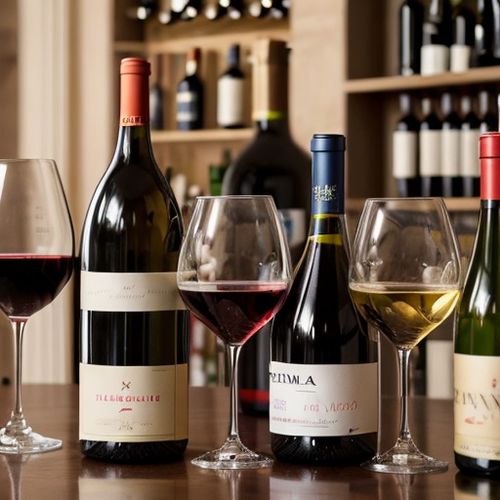
In the intricate world of wine, where terroir and tradition intertwine, the threat of a 200% tariff on European-made products looms like a dark cloud over both Old World vineyards and New World wine enthusiasts. This potential tariff, proposed by President Donald Trump and set to take effect in April, promises to upend not only the economics of the wine industry but also the palates of American consumers who have long savored the rich flavors of Bordeaux, Chianti, and other European classics.
The wine industry, already grappling with an 8% drop in US sales last year, now faces another formidable challenge. According to Francis Creighton, CEO of the Wine and Spirits Wholesalers of America (WSWA), the "vast majority" of wine importers and distributors will struggle to manage these added expenses. "At the end of the day, these tariffs, if implemented, won't just hurt our industry—they will directly raise prices for American consumers," Creighton warned in a statement. The implications are far-reaching, as imported wine and spirits account for 35% of the revenue of all US alcohol sales. If tariffs go into effect, the cost of cocktails and wines ordered at restaurants or purchased at retailers will "rise significantly," according to the trade organization.
The economic impact of these tariffs extends beyond the wine aisles of supermarkets and the menus of upscale restaurants. The rising costs could cause some consumers to stay at home, hurting bartenders, servers, and other bar and restaurant workers who depend on customer traffic for tips and shift hours. In essence, the tariffs could ripple through the entire hospitality industry, dampening an already fragile economic recovery.
However, the threat of tariffs has also sparked a renewed interest in American-made wines, which many experts believe can stand toe-to-toe with their European counterparts. Allison Luvera, co-founder and CEO of California-based Juliet Wine, is among those championing the quality and diversity of US wines. "I’m sure some wine purists would disagree with me, but I definitely think that almost anything you can find in Europe, you can find a great equivalent here in the United States," Luvera said. One reason for this confidence lies in America's diverse climate and soils. "When you have a country as big as ours, with so much diversity in where we can produce wine, inevitably you’re going to find pockets that match the great wine-growing regions in Europe," she explained.
The history of American wine is punctuated with moments of triumph, such as the legendary "Judgment of Paris" competition in 1976, where wines from Napa Valley, California, won both the red and white categories, beating renowned chateaux and domaines from Bordeaux and Burgundy in a blind taste test. Since then, American equivalents of red Burgundy wines, produced in eastern France, have risen in reputation. For drinkers seeking a similar experience, Luvera recommends looking for a Pinot Noir and Chardonnay, respectively.
There are standout regions in the US that produce wines similar in style and profile to their French counterparts. For example, the Willamette Valley in Oregon, particularly the Eola-Amity Hills, is "putting out wines that rival some of the best stuff coming out of France," Luvera said. In California, the Russian River Valley in Sonoma and Santa Rita Hills in Santa Barbara offer climates similar to Burgundy, France, making them ideal for producing comparable wines.
For those craving a crisp white wine similar to Sancerre, a Sauvignon Blanc from California's Central Coast is a worthy alternative, as the grapes are grown in climates similar to those in France. Beyond California, the Finger Lakes in New York offer Riesling white wines with an "incredible microclimate that’s very similar to some of the cooler climates in Europe, whether it be Germany, Austria, or parts of France like the Loire Valley."
Perhaps the only wine that doesn't have a one-for-one comparison is Champagne, which can only be made in specific regions of France. However, Luvera points to sparkling winemakers like California-based Schramsberg Vineyards, which use the same methods and grapes as their French counterparts. "If somebody wanted to find a Champagne alternative here, they would want to look for a sparkling wine made in the United States that says ‘traditional method,’” she said. "That’s going to be the most similar product to Champagne."
As the weather warms and rosé season approaches, Luvera has an American-made alternative for the French pink wine. To achieve the "same light, approachable, delicious style" as rosé, drinkers can "look to California, specifically the Central Coast, and anything that’s made of Grenache," she said, referring to the grape variety native to France.
The US imports roughly $5.4 billion in wine from the EU, according to a Morningstar note, which warns that "such an extensive and valuable trading relationship" means tariffs could have a "materially negative impact on both markets." While Juliet Wine and other American producers might benefit from the tariffs, Luvera is against them. She sees the wine industry as an "interconnected ecosystem of distributors, retailers, and restaurants," where everyone would be negatively impacted if the tariffs go into effect. "Even if individual brands aren’t directly affected, the downstream effect on domestic producers would be significant," she said.
The looming tariffs have also sparked anxiety in Europe. Pierre Gonet, a winemaker at Champagne Philippe Gonet, expressed his fears in an interview with BFM-TV, a Paris affiliate. "I’m afraid that all our customers will run away from us if Trump imposes tariffs," he said. "We’re still hoping that our leaders will be able to intervene and calm Mr. Trump down so that Champagne stays Champagne."
The proposed 200% tariff on European wines represents more than just a trade dispute; it is a potential seismic shift in the global wine market. While American consumers may find solace in the growing reputation and diversity of US wines, the broader economic and cultural impacts are profound. From the vineyards of France to the tasting rooms of California, the wine industry is bracing for a future where tradition and innovation must navigate the choppy waters of international politics. As American drinkers adjust their palates to embrace domestic alternatives, the hope remains that diplomacy can prevail, preserving the delicate balance of a cherished global industry.

By Emma Thompson/Mar 18, 2025
By Elizabeth Taylor/Mar 18, 2025
By Grace Cox/Mar 18, 2025
By Noah Bell/Mar 18, 2025

By Victoria Gonzalez/Mar 18, 2025
By Ryan Martin/Mar 18, 2025

By Sarah Davis/Mar 18, 2025

By David Anderson/Mar 18, 2025
By Amanda Phillips/Mar 18, 2025

By Amanda Phillips/Mar 18, 2025
By Emily Johnson/Mar 13, 2025
By Amanda Phillips/Mar 13, 2025
By Christopher Harris/Mar 13, 2025

By Michael Brown/Mar 13, 2025
By Samuel Cooper/Mar 13, 2025

By Daniel Scott/Mar 13, 2025