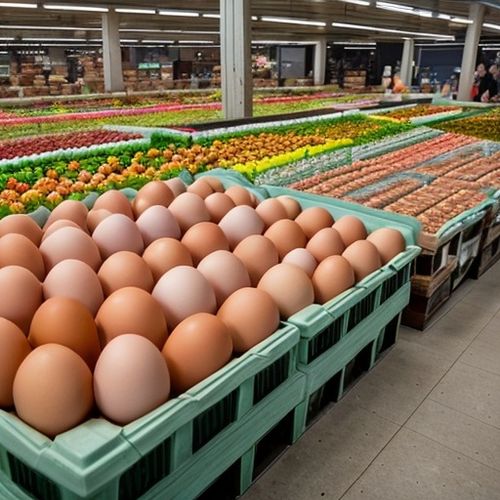
In the intricate dance of supply and demand, few markets have faced as much scrutiny and volatility as the egg market in recent times. For months, consumers have grappled with the harsh reality of fewer eggs at higher prices, a situation exacerbated by the relentless spread of avian flu. However, the first week of March brought a glimmer of hope as wholesale egg prices fell, hinting at potential relief for weary consumers. Yet, as with any market, the path to stability is fraught with challenges, and the egg market is no exception.
The Recent Dip in Wholesale Prices
According to the latest market report from the Department of Agriculture, wholesale prices for loose eggs fell by $1.20 in the first week of March, averaging about $6.85 per dozen nationally. This represents a 15% drop from the previous week, a significant decline that has caught the attention of both industry insiders and consumers. While these are the prices retailers pay, they often serve as a leading indicator of what consumers might expect at the grocery store. The USDA attributes this drop to a temporary lull in avian flu outbreaks and a slight easing in demand for shell eggs.
The Role of Avian Flu
The ongoing battle against avian flu has been a central factor in the egg market's volatility. Since 2022, the virus has claimed the lives of 127 million egg-laying birds, leading to significant shortages and skyrocketing prices. In February alone, 12 million birds, mostly layers, were lost, bringing the total number of affected birds in 2025 to over 35 million. This staggering loss has driven egg prices to record highs, with the Consumer Price Index showing a 10.4% increase in February and a 15.2% surge in January. Year-over-year, egg prices have risen by a staggering 58.8%.
Government Intervention and the Path to Stabilization
In response to the crisis, Agriculture Secretary Brooke Rollins announced a $1 billion plan to rein in soaring egg prices. The strategy includes increasing biosecurity measures, deploying epidemiologists to work with egg producers, exploring new vaccines, and increasing egg imports from countries like Mexico and Turkey. These measures aim to offset the short supply in the US, with Mexico and Turkey sending a combined 827,000 dozen eggs to help stabilize the market.
Despite these efforts, Rollins acknowledged in a Wall Street Journal op-ed that the plan "won't erase the problem overnight." She predicted that the egg market would take another three to six months to stabilize, a timeline that seems to be playing out in the current market conditions. While the recent drop in wholesale prices is encouraging, consumers are still paying elevated prices at the grocery store, highlighting the lag between wholesale and retail markets.
The Impact of Holidays and Seasonal Demand
The egg market's volatility is further complicated by the upcoming spring holidays. Easter and Passover, which fall on April 12 and April 20 respectively, are known for their high demand for eggs, similar to Thanksgiving, Christmas, and Hanukkah. This seasonal spike in demand is expected to put upward pressure on prices, despite the recent dip in wholesale costs.
The USDA report suggests that lighter demand in the weeks leading up to these holidays may give egg producers a brief window to rebuild their stock. However, the coinciding spring migration of wild birds poses an ongoing threat. Wild birds are a leading cause of avian flu spread, and their migration patterns could lead to further outbreaks, jeopardizing the fragile progress made in recent weeks.
Industry Perspectives and Future Challenges
Emily Metz, President of the American Egg Board, emphasized the industry's vigilance in monitoring the spring migration. "Egg farmers are closely watching the spring migration of wild birds, recognizing that wild birds are a leading cause of the spread of this virus and pose a great and ongoing threat to egg-laying flocks," she said. This underscores the delicate balance egg producers must strike between rebuilding their flocks and protecting them from further outbreaks.
The industry's efforts to combat avian flu and stabilize prices are commendable, but the challenges remain immense. The loss of millions of egg-laying birds has not only impacted supply but also disrupted the livelihoods of farmers and the broader agricultural community. The economic ripple effects are felt across the supply chain, from farmers to retailers and ultimately to consumers.
The Role of Consumers and Market Dynamics
For consumers, the recent dip in wholesale prices offers a glimmer of hope, but the reality at the grocery store remains challenging. While President Donald Trump took credit for the falling egg prices, citing the administration's efforts to address the issue, the reality is more complex. The market dynamics at play are influenced by a combination of factors, including the temporary lull in avian flu outbreaks, increased biosecurity measures, and the import of eggs from abroad.
However, consumers must also be prepared for potential price increases in the coming months. The spring holidays, combined with the ongoing threat of avian flu, mean that the egg market's stability is still a work in progress. Consumers may need to adjust their purchasing habits and consider alternative protein sources to mitigate the impact of high egg prices.
The Broader Economic Implications
The egg market's volatility is not just a matter of supply and demand; it has broader economic implications. High egg prices can impact the cost of living, particularly for low-income households that rely on eggs as a staple food. Additionally, the agricultural sector's struggles can have a ripple effect on related industries, such as food processing and restaurant businesses, which depend on stable and affordable supplies of eggs.
The government's intervention, while necessary, highlights the delicate balance between market forces and policy measures. The $1 billion plan to stabilize egg prices is a significant investment, but its success will depend on the coordinated efforts of producers, policymakers, and consumers. The coming months will be crucial in determining whether these measures can effectively address the ongoing crisis.
A Fragile Balance and a Path Forward
The egg market's recent dip in wholesale prices offers a glimmer of hope, but the path to stability remains fraught with challenges. The ongoing battle against avian flu, the impact of seasonal demand, and the broader economic implications all contribute to the complexity of this issue. While the government's efforts to stabilize prices are commendable, the reality is that the market's stability will depend on a combination of factors, including biosecurity measures, increased imports, and consumer behavior.
As we look to the future, the egg market's journey to stability will require vigilance, innovation, and resilience. Producers must continue to adapt to changing conditions, policymakers must remain committed to supporting the industry, and consumers must be prepared to navigate a volatile market. The recent drop in wholesale prices is a positive sign, but the true test lies ahead, as the industry faces the dual challenges of holiday demand and the ongoing threat of avian flu.
In this delicate dance of supply and demand, the egg market's future remains uncertain. However, with coordinated efforts and a focus on long-term solutions, there is hope that stability can be achieved. The journey may be long and challenging, but the resilience of the agricultural community and the importance of eggs as a staple food mean that the path forward must be navigated with care and determination.

By Emma Thompson/Mar 18, 2025

By Elizabeth Taylor/Mar 18, 2025

By Grace Cox/Mar 18, 2025

By Noah Bell/Mar 18, 2025

By Victoria Gonzalez/Mar 18, 2025

By Ryan Martin/Mar 18, 2025

By Sarah Davis/Mar 18, 2025

By David Anderson/Mar 18, 2025
By Amanda Phillips/Mar 18, 2025

By Amanda Phillips/Mar 18, 2025

By Emily Johnson/Mar 13, 2025

By Amanda Phillips/Mar 13, 2025
By Christopher Harris/Mar 13, 2025

By Michael Brown/Mar 13, 2025
By Samuel Cooper/Mar 13, 2025

By Daniel Scott/Mar 13, 2025