Two months ago, Jamie Dimon, the CEO of JPMorgan Chase, delivered a blunt message in defense of President Donald Trump's tariff policy: "Get over it." His words, spoken at the World Economic Forum in Davos, Switzerland, reflected a perspective that tariffs could be both an "economic tool" and an "economic weapon," depending on their application. Dimon's stance at the time seemed to align with the belief that tariffs, despite their potential to cause some inflation, might be justified if they served a broader national security interest. However, as the economic landscape has shifted and cracks have begun to form in the US economy, Dimon's tone has softened, and his message has evolved.
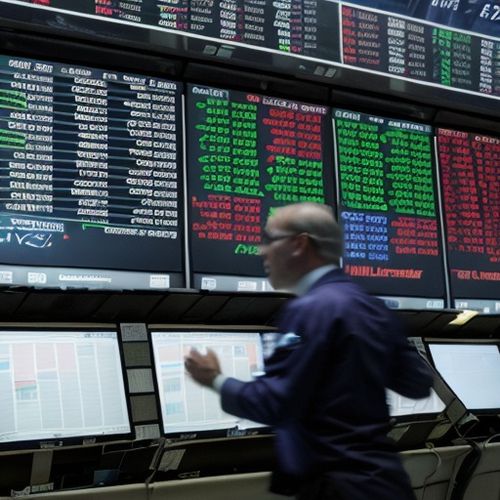
In a recent interview with Semafor, Dimon acknowledged that while the average American consumer might not alter their daily routine based on tariff news, companies certainly might. "Uncertainty is not a good thing," he noted, highlighting the growing unease among businesses facing the unpredictable nature of trade policies. This tempered stance reflects a growing recognition that the on-and-off tariff policy has introduced significant volatility into the stock market and broader economy. The S&P 500, for instance, was down more than 7% over one month, despite a brief rebound on the day of the latest tariff announcement.
The Ripple Effects of Tariffs
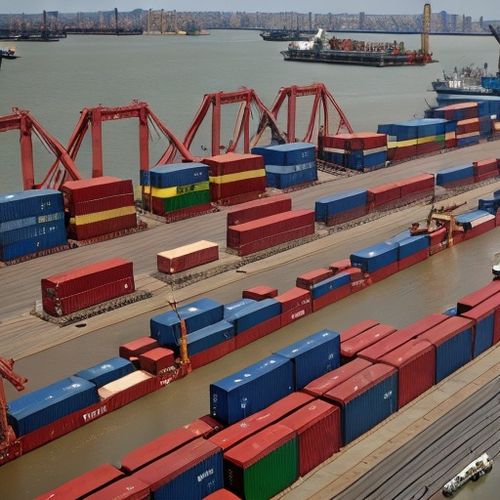
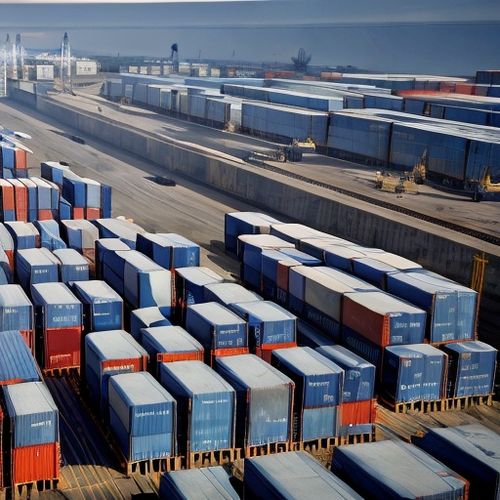
The imposition of sweeping 25% tariffs on all steel and aluminum imports into the United States has sparked swift retaliation from key trading partners like Canada and the European Union. These tariffs, part of a broader trade war strategy aimed at revitalizing American manufacturing, slowing illegal immigration, and ending fentanyl smuggling, have far-reaching implications. Economists warn that such broad-based tariffs could drive up prices on a wide range of goods, from food to new homes, potentially straining the budgets of American consumers.
The uncertainty surrounding these tariffs is not just theoretical; it is already manifesting in tangible ways. Companies, wary of the potential for increased costs and disrupted supply chains, are pausing investments and delaying expansion plans. This hesitation is a natural response to the unpredictable nature of the current trade environment. As Dimon noted, uncertainty breeds caution, and in the business world, caution often translates to delayed growth.
The Broader Economic Impact
Larry Fink, CEO of BlackRock, the world's largest asset manager, echoed Dimon's concerns, suggesting that the economy is already showing signs of weakening due to tariffs. "The collective impact in the short run is that people are pausing, they’re pulling back," Fink told Kayla Tausche in an exclusive interview. His observations highlight a critical point: the cumulative effect of tariffs and trade uncertainty is not just felt in the stock market but also in the day-to-day operations of businesses across the economy.
Despite these short-term challenges, Fink remains optimistic about the long-term potential of the United States. He believes that the Trump administration's policies, including tariffs, could ultimately benefit the country by leading to more balanced and reciprocal trade agreements. This perspective underscores a fundamental tension in the current economic debate: while tariffs may cause short-term pain, they could potentially lead to long-term gains if they result in more favorable trade conditions.
The Role of CEOs in Navigating Uncertainty
As leaders of some of the world's largest financial institutions, Dimon and Fink are uniquely positioned to observe and comment on the broader economic impacts of tariffs. Their tempered tones reflect a growing recognition that the business community is deeply concerned about the uncertainty introduced by the current trade policies. CEOs across industries are grappling with the same dilemma: how to plan for the future when the rules of the game are constantly changing.
For companies, the path forward involves a delicate balance of preparing for potential disruptions while maintaining a focus on long-term growth. This might involve diversifying supply chains, investing in technology to improve efficiency, and engaging in proactive risk management strategies. For policymakers, the challenge is to strike a balance between protecting domestic industries and avoiding the unintended consequences of a prolonged trade war.
The Long-Term Outlook
Despite the current volatility and uncertainty, both Dimon and Fink remain cautiously optimistic about the long-term prospects of the US economy. They recognize that tariffs, while disruptive in the short term, could potentially lead to more balanced trade relationships and stronger domestic industries. Fink's belief that reciprocal tariffs might ultimately reduce trade barriers highlights a key point: the goal of these policies is not just to protect American industries but also to create a more level playing field in global trade.
However, achieving this balance will require careful navigation and a willingness to adapt. The business community, policymakers, and consumers must all play a role in managing the risks and seizing the opportunities presented by the current economic landscape. For CEOs like Dimon and Fink, this means continuing to advocate for stability and predictability while also preparing for the possibility of further disruptions.
Finding Stability Amid Uncertainty
The tariff policy, with its potential to both protect and disrupt, has introduced a new layer of complexity into an already uncertain economic environment. As Dimon and Fink have noted, the short-term impacts of tariffs are already being felt in the form of market volatility and business hesitation. However, the long-term potential for more balanced trade relationships and stronger domestic industries offers a glimmer of hope.
In this dynamic environment, the role of business leaders is crucial. By advocating for stability and predictability, CEOs can help guide their companies and the broader economy through this period of uncertainty. For policymakers, the challenge is to balance the need for protection with the risks of prolonged trade conflict. And for consumers, the path forward involves staying informed and adapting to the changing economic landscape.
Ultimately, the success of the current tariff strategy will depend on the ability of all stakeholders to navigate the complex interplay of short-term challenges and long-term opportunities. As the global economy continues to evolve, the lessons learned from this period of uncertainty will shape the future of trade and economic policy for years to come.

By Emma Thompson/Mar 18, 2025
By Elizabeth Taylor/Mar 18, 2025

By Grace Cox/Mar 18, 2025

By Noah Bell/Mar 18, 2025

By Victoria Gonzalez/Mar 18, 2025
By Ryan Martin/Mar 18, 2025

By Sarah Davis/Mar 18, 2025
By David Anderson/Mar 18, 2025
By Amanda Phillips/Mar 18, 2025

By Amanda Phillips/Mar 18, 2025
By Emily Johnson/Mar 13, 2025
By Amanda Phillips/Mar 13, 2025
By Christopher Harris/Mar 13, 2025

By Michael Brown/Mar 13, 2025
By Samuel Cooper/Mar 13, 2025

By Daniel Scott/Mar 13, 2025