A year ago, America found itself in a peculiar predicament—a "vibecession," where the economy was performing well, but the national mood was overwhelmingly pessimistic. Today, the situation has evolved. The vibes and the economic data are aligning, but not in a positive direction. Instead, a confluence of factors is painting a bleak picture for the US economy, one that threatens to erode the very foundations of consumer confidence and economic stability.
In 2025, the once-reliable engine of American economic growth—consumer spending—is showing signs of strain. Retail sales last month were significantly weaker than anticipated, a worrying indicator that the consumer-driven economy may be losing steam. Sentiment has plummeted to its lowest level since 2022, when inflation soared above 9% and the S&P 500 tumbled by more than 19%. This decline in sentiment is not just a reflection of economic data; it is a manifestation of the pervasive uncertainty that has taken hold of the nation.
The housing market, traditionally a bellwether for economic health, is also signaling trouble. Home construction is down, and one closely watched real-time forecast suggests that the economy could contract by 2.4% this quarter. This decline is not just a statistical anomaly; it is a symptom of a broader malaise that is gripping the nation.
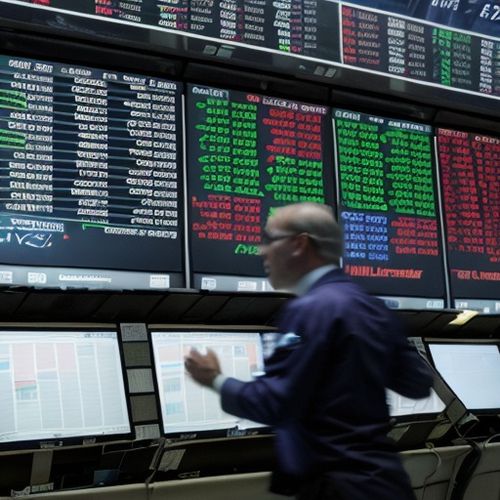
Amid this backdrop, financial markets are in turmoil, driven by the White House's ever-shifting tariff policies. These policies, which President Donald Trump touts as a means to protect American industries, have instead introduced a level of uncertainty that has left businesses, consumers, and investors paralyzed. The Fear and Greed Index, a measure of Wall Street sentiment, is currently flashing "extreme fear." This fear is not unfounded; the tariffs, intended as a tool for economic negotiation, have instead become a sledgehammer, threatening to shatter the fragile equilibrium of the global economy.
The tariffs are not the only factor contributing to this economic malaise. While Trump is quick to take credit for positive data points—such as the recent decline in mortgage rates and gas prices—these statistics mask deeper, more troubling trends. Mortgage rates have indeed been trending lower, but this is primarily due to the declining 10-year Treasury yield, a safe-haven asset that becomes more attractive when investors see signs of trouble in the stock market. The decline in gas prices, which Trump attributes to his "drill, baby, drill" agenda, is actually the result of a global supply-and-demand imbalance, particularly weaker demand in China. Meanwhile, inflation, though cooling, remains above the Federal Reserve's target rate of 2%, hovering at an annualized rate of 2.8%.
The labor market, a critical pillar of economic stability, is also showing signs of strain. While the latest monthly jobs report suggests that the labor market remains strong, it fails to account for recent layoffs at federal agencies, orchestrated by Elon Musk. The ADP survey of private sector payrolls reveals that sectors like education and health services, which are particularly vulnerable to shifts in government spending, have cut 28,000 jobs in the past month alone.
The resilience of the US economy has long been a source of pride and confidence. However, the current climate of uncertainty is testing that resilience in unprecedented ways. David Kelly, chief global strategist at JPMorgan Asset Management, aptly described the situation: "This is a very resilient economy. It can take a licking and keep on ticking. But it doesn't like this uncertainty." The uncertainty created by the White House's economic policies has left many businesses feeling like "deer in headlights," a dangerous place to be in an already precarious economic environment.
The path forward is fraught with challenges. The future of the US economy hinges on whether Trump will retreat from his tariff policies, which have become a significant source of economic anxiety. The tariffs, intended to protect American industries, have instead introduced a level of uncertainty that has left businesses and consumers wary. The labor market, though still strong, is showing signs of strain, and the housing market is contracting. Meanwhile, financial markets are in turmoil, driven by fear and uncertainty.
The alignment of negative vibes and economic data is not a coincidence. The US economy, once a beacon of stability and growth, is now facing significant headwinds. The tariffs, intended as a tool for economic negotiation, have instead become a source of uncertainty and fear. The labor market, though resilient, is showing signs of strain, and the housing market is contracting. The future of the US economy depends on whether policymakers can navigate these challenges and restore a sense of stability and confidence. Until then, the warning lights are flashing red, and the road ahead remains uncertain.

By Emma Thompson/Mar 18, 2025
By Elizabeth Taylor/Mar 18, 2025

By Grace Cox/Mar 18, 2025
By Noah Bell/Mar 18, 2025
By Victoria Gonzalez/Mar 18, 2025
By Ryan Martin/Mar 18, 2025

By Sarah Davis/Mar 18, 2025
By David Anderson/Mar 18, 2025
By Amanda Phillips/Mar 18, 2025

By Amanda Phillips/Mar 18, 2025
By Emily Johnson/Mar 13, 2025
By Amanda Phillips/Mar 13, 2025
By Christopher Harris/Mar 13, 2025
By Michael Brown/Mar 13, 2025
By Samuel Cooper/Mar 13, 2025
By Daniel Scott/Mar 13, 2025